Dye sublimation
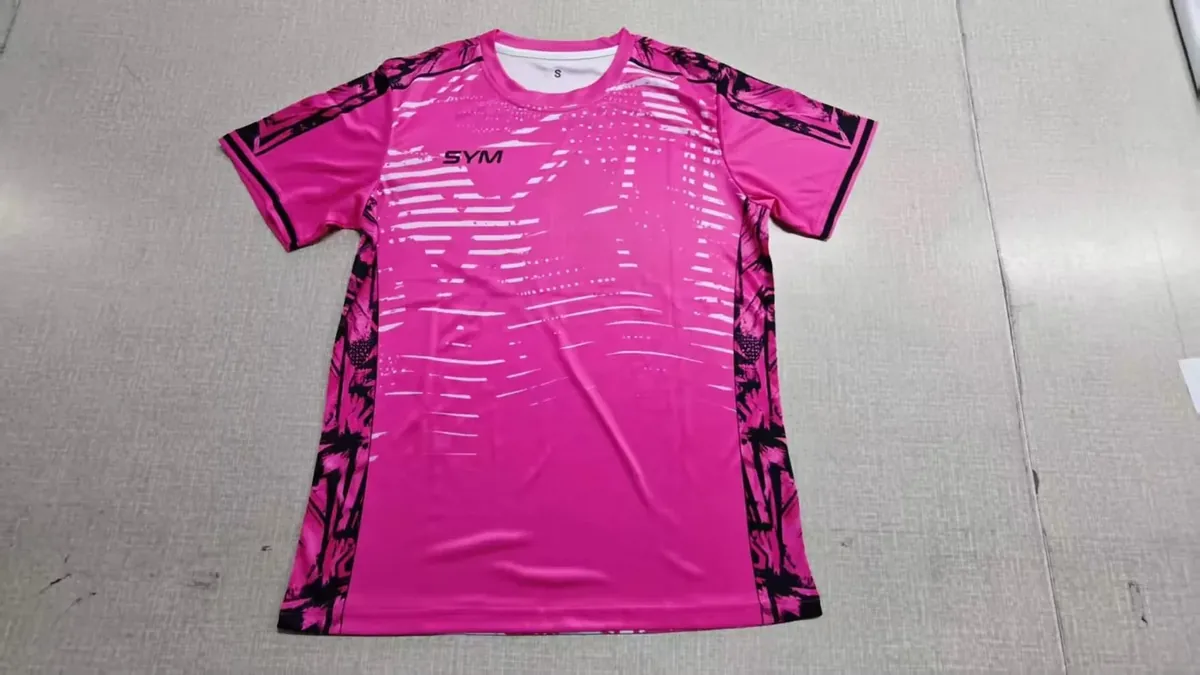
Dye sublimation prints artwork into polyester fabric using heat and pressure. The dye becomes part of the fibre, so the surface stays flat and breathable instead of carrying a printed film.
It is the natural choice for all-over graphics: gradients, camo, geometric panels, sponsor blocks and full-kit designs that run edge to edge. On soccer jerseys, basketball uniforms and specialty teamwear, it is the method that allows a complete design without adding weight.
The limits are practical. Sublimation works on polyester, and the final colour depends on the base fabric shade. Very fine detail can soften on textured mesh, so artwork should be tested on the actual substrate before bulk.
Tackle-twill embroidery
Tackle-twill builds a graphic from cut fabric layers and stitching. Numbers, letters and crests get a raised, stitched edge that reads as a genuine team uniform rather than a printed look.
It suits stitched basketball jerseys, hockey sweaters and traditional baseball programs where the number or wordmark is a core part of the identity. Multi-layer twill allows an outline, a fill and a shadow in separate colours.
The trade-off is weight and stiffness. Twill adds layers to the panel, and dense artwork can affect drape on a lightweight jersey. Placement, layer count and stitch density are approved on the sample so the finished piece still moves correctly.
Silicone crests and foil accents
Silicone crests are bonded to the fabric as a raised, rubberised badge. They give a clean edge and a modern three-dimensional look that suits pro soccer jerseys and retail capsules.
Foil adds a metallic surface for crests, sponsor marks or trim lines. On the black and gold jersey, gold foil is used as an accent against a matte honeycomb base, so the shine reads as a deliberate detail rather than an all-over finish.
Both are applied after the garment is cut, and both depend on the substrate. A textured mesh, a coated surface or a stretch panel can change how the bond behaves. Wash testing belongs on the approval sample, not on the bulk order.
Screen print, heat transfer and appliqué
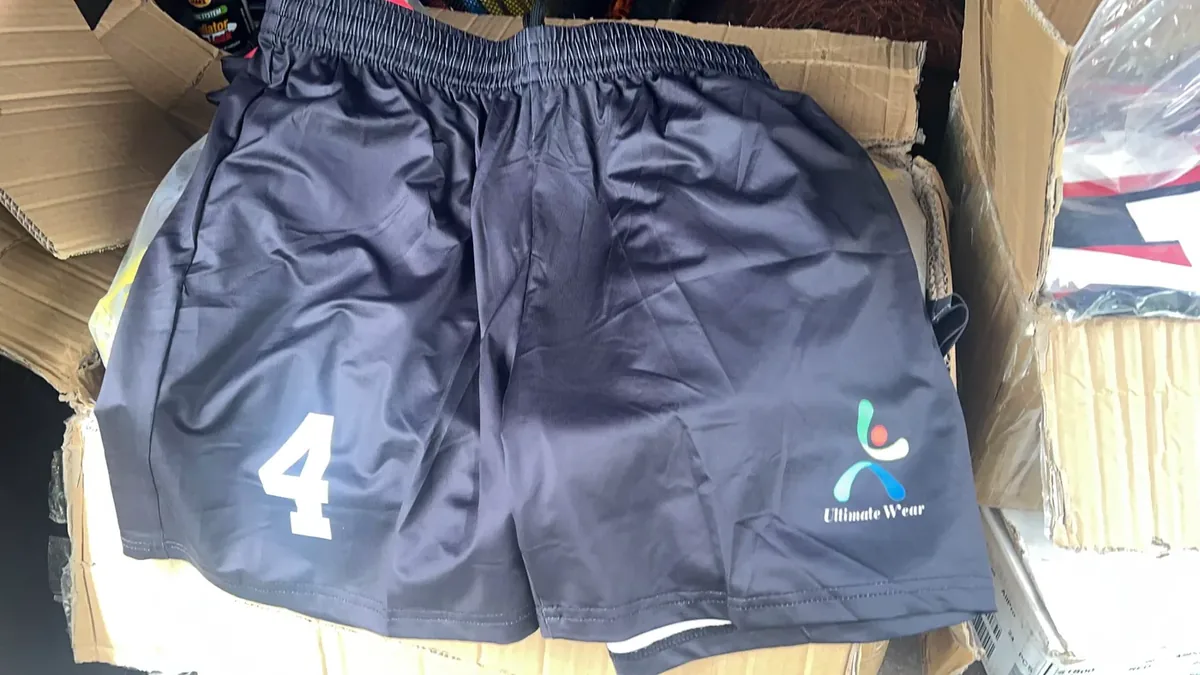
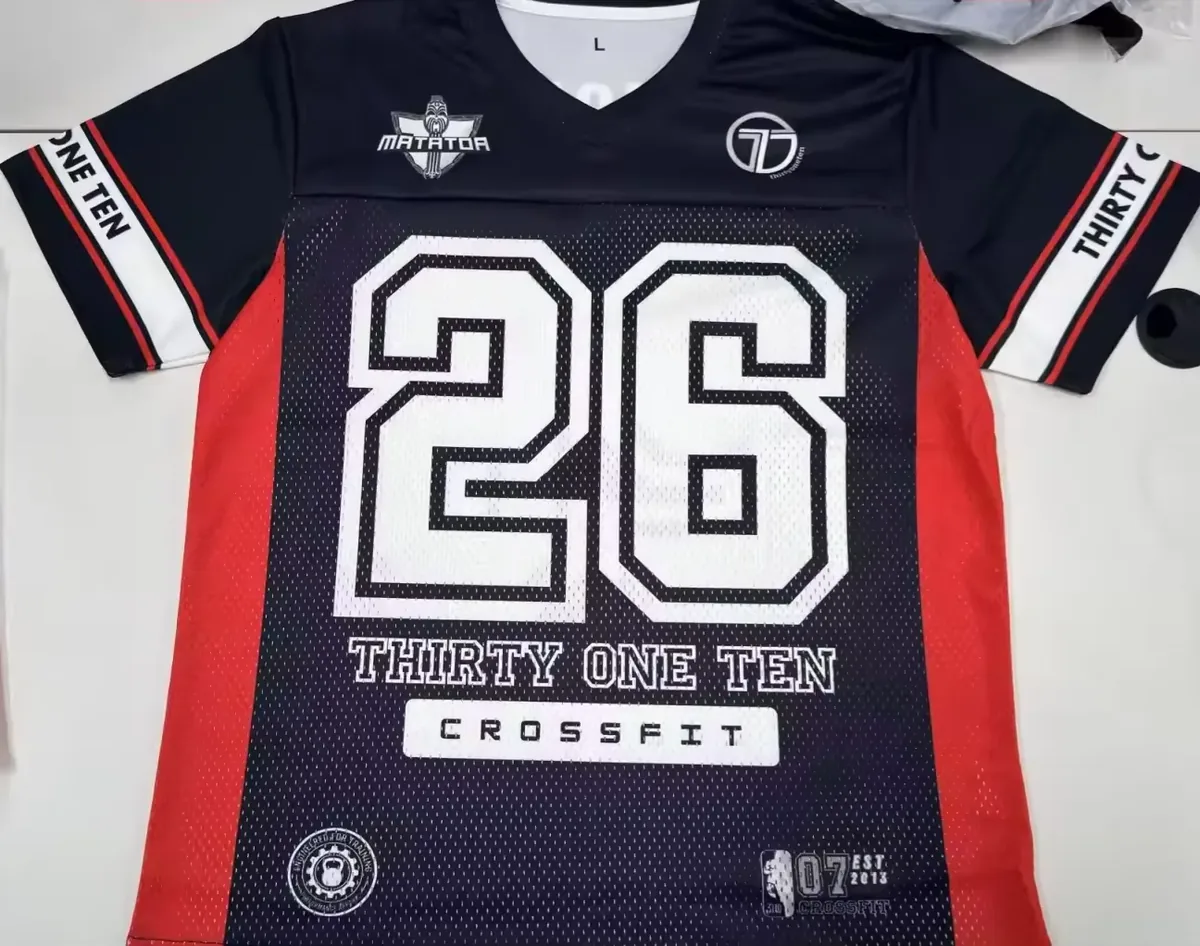
Screen print lays ink onto the surface and works well for solid spot colours on flat panels. Heat transfer applies a prepared graphic with pressure and heat, which suits smaller logos and repeat marks. Appliqué sews a cut panel onto the garment for a heavier, layered look.
These methods are often used together with sublimation: a sublimated base kit, a twill number, a silicone crest and a foil sponsor mark can all appear on the same uniform. The important part is that the combination is tested as a whole.
The capabilities page lists the decoration processes available across the range.
How to choose per garment
Start with the job the decoration has to do:
- All-over design: dye sublimation.
- Raised number or wordmark: tackle-twill embroidery.
- Modern crest with a clean edge: silicone.
- Metallic accent or sponsor mark: foil.
- Solid spot colour on a flat panel: screen print.
Then check the fabric. Lightweight jerseys, heavy air mesh, fleece and ripstop all respond differently to heat, stitching and bonding. The approved sample is where the method, placement and colour are fixed for bulk.